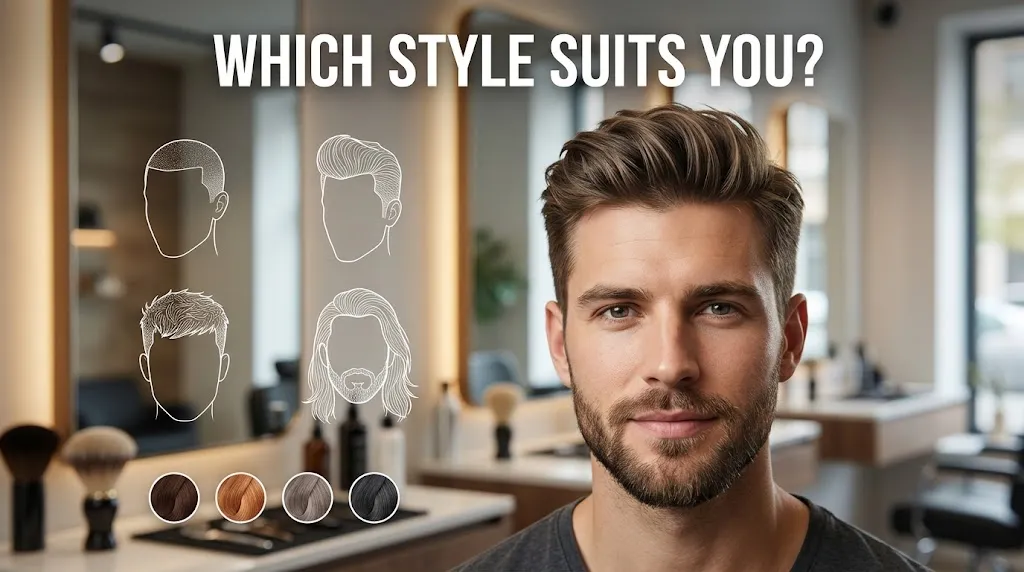
Choosing the right hair colour or hairstyle can completely change your appearance. A style that looks great on one person may not create the same effect on another because face shape, skin tone, hair texture, age, lifestyle, and personal style all make a difference.
The good news is that you do not need to guess. By understanding your face shape, natural colouring, hair type, and daily routine, you can narrow down the hairstyles and colours that are most likely to suit you.
This guide explains simple ways to find the right hair colour and hairstyle before making a major change.
Read Also: How to Find Someone Like Yourself
Start With Your Face Shape
Your face shape is one of the most useful things to consider when choosing a hairstyle.
Most people generally fall into categories such as oval, round, square, oblong, heart, or diamond. Your face does not need to fit perfectly into one category. The goal is simply to identify your dominant features.
Read Also: How to Find a Russian Wife?
| Face Shape | Hairstyles to Consider | Styles to Approach Carefully |
|---|---|---|
| Oval | Most lengths, textured cuts, side parts | Very few restrictions |
| Round | Volume on top, longer layers, textured styles | Excessive width at the sides |
| Square | Textured cuts, soft layers, side parts | Extremely sharp and boxy cuts |
| Oblong | Medium lengths, fringe, side volume | Excessive height on top |
| Heart | Side-swept styles, medium layers | Too much volume around the forehead |
| Diamond | Textured styles, fringe, medium layers | Excessively tight sides with too much top volume |
These are general guidelines rather than strict rules. Your hair texture and personal preference are equally important.
How to Determine Your Face Shape
You can estimate your face shape by looking at the width of your forehead, cheekbones, and jawline and comparing them with the overall length of your face.
Take a front-facing photograph with your hair pulled away from your face. Look at the outline of your forehead, cheeks, jaw, and chin.
You can also stand in front of a mirror and observe whether your face appears longer than it is wide, whether your jaw is particularly strong, or whether your cheekbones are the widest part.
Do not become overly concerned about getting the category exactly right. Hairstyle recommendations are not mathematical rules.
Consider Your Hair Type
A hairstyle should work with your natural hair rather than constantly fight against it.
Hair can be straight, wavy, curly, or tightly curled. It can also be fine, medium, or thick.
For example, a haircut designed to create movement may look very different on naturally straight hair compared with curly hair.
Before choosing a style, consider:
- Hair thickness
- Natural texture
- Hair density
- Growth pattern
- Cowlicks
- Hairline
- Current hair length
- Amount of styling required
A hairstyle that looks excellent in a photograph may require significant daily styling to maintain.
Think About Your Lifestyle
The best hairstyle is not necessarily the most fashionable one. It is the one you can realistically maintain.
If you have very little time in the morning, a low-maintenance haircut may be a better choice than a style that requires blow-drying, straightening, or styling products every day.
Consider how much time you are willing to spend maintaining your hair.
| Lifestyle | Suitable Approach |
|---|---|
| Very busy | Low-maintenance cuts |
| Office or professional | Clean, structured styles |
| Active or sporty | Shorter, practical styles |
| Fashion-focused | Trend-based cuts and colours |
| Minimal styling | Natural-looking cuts |
| Experimental | Longer or more creative styles |
Your hairstyle should fit your everyday life, not just look good for one occasion.
How to Choose a Hair Colour That Suits You
Hair colour can affect how your skin looks and can change the overall impression of your face.
A useful starting point is your skin’s undertone.
Skin undertones are commonly described as warm, cool, or neutral.
Warm Undertones
People with warm undertones may find that shades with golden, honey, caramel, copper, or warm brown qualities complement their appearance.
Cool Undertones
Cool undertones may work well with shades such as ash brown, cool black, platinum, or other colours with cooler characteristics.
Neutral Undertones
If your undertone is neutral, you may have greater flexibility and may be able to wear both warm and cool shades successfully.
These are only general guidelines. The exact result also depends on your natural hair colour, skin depth, lighting, and the specific dye.
How to Identify Your Skin Undertone
One common method is to look at the veins on the inside of your wrist in natural daylight.
If they appear more green, you may have a warm undertone. If they appear more blue or purple, you may have a cool undertone. If it is difficult to determine, you may have a neutral undertone.
Another approach is to consider how your skin reacts to different metals. Some people find that gold jewellery complements them more, while others prefer silver. People with neutral undertones may find that both work well.
These methods are not perfect, so use them as starting points rather than definitive tests.
Consider Your Natural Hair Colour
Your natural hair colour is another important factor.
If you want a subtle change, choosing a shade close to your natural colour can create a more natural result.
If you want a dramatic transformation, you may need additional processing to achieve the desired shade, particularly when going significantly lighter.
Before making a major colour change, consider how much maintenance will be required as your natural roots grow.
Hair Colour Ideas by General Appearance
There is no single colour that is universally best for a particular skin tone, but some combinations can provide inspiration.
| Hair Colour | General Effect |
|---|---|
| Natural Black | Strong and classic |
| Dark Brown | Soft and natural |
| Chocolate Brown | Warm and versatile |
| Caramel | Bright and dimensional |
| Honey | Warm and lighter-looking |
| Ash Brown | Cool and modern |
| Copper | Bold and expressive |
| Burgundy | Deep and dramatic |
| Blonde | Bright and noticeable |
| Platinum | Very bold and high-maintenance |
The final result depends heavily on the starting colour and the colouring technique used.
Match the Hairstyle With Your Features
Your hairstyle can emphasize or soften particular facial features.
For example, layers can add movement, while a fringe can change the visual proportions of the forehead and face.
A side part can create a different appearance from a center part, even when the haircut itself remains the same.
Think about what you want your hairstyle to achieve.
Do you want your face to appear longer? Do you want more volume? Do you want a softer appearance? Or do you simply want a modern and easy-to-maintain style?
Answering these questions can make choosing a haircut much easier.
Look at Your Hairline
Your hairline can also influence which hairstyles work best.
A strong or straight hairline may suit many styles, while a receding hairline may benefit from textured cuts, shorter sides, or styles that work naturally with the hairline.
There is no need to hide every natural feature. A good barber or stylist can help choose a cut that works with your existing hair pattern.
Use Photos for Inspiration
Before visiting a barber or hairstylist, collect a few photos of hairstyles you like.
Try to find several examples rather than relying on one photograph.
Pay attention to:
- Face shape
- Hair texture
- Hair length
- Hair density
- Colour
- Styling direction
Remember that a hairstyle can look different depending on lighting, camera angle, hair products, and professional styling.
Use photos as references rather than expecting an identical result.
Ask a Professional Before a Major Change
A professional barber or hairstylist can assess your hair in person and identify details that may be difficult to notice yourself.
Tell them what you like about your reference photos and, more importantly, explain what you do not want.
If you are considering a major colour change, ask about maintenance, potential damage, expected results, and how often you will need touch-ups.
A professional consultation can help prevent unrealistic expectations.
Try Small Changes First
You do not always need to make a dramatic change immediately.
If you are unsure about a new hairstyle, start by changing the length slightly or trying a different parting.
For hair colour, you can begin with subtle highlights or a shade close to your natural colour before making a more dramatic transformation.
Small changes allow you to understand what works for you without committing to a completely different appearance.
Consider Your Age and Personal Style
Age does not determine which hairstyle you can wear, but your preferred appearance and lifestyle may change over time.
Some people prefer classic hairstyles, while others enjoy following current trends.
The most suitable style is usually one that makes you feel comfortable and confident.
You do not have to follow every popular hairstyle simply because it is trending.
What If You Still Cannot Decide?
If you are stuck between several hairstyles or colours, compare them based on practical factors.
Ask yourself:
- Does it suit my natural hair texture?
- Does it work with my face shape?
- How much maintenance will it require?
- Will the colour work with my overall appearance?
- Can I style it easily every day?
- Does it match my personality and lifestyle?
- Am I choosing it because I like it or simply because it is trending?
The answers can help you eliminate options that are difficult to maintain or unsuitable for your routine.
Common Mistakes When Choosing a Hairstyle
One common mistake is choosing a hairstyle solely because it looks good on a celebrity or influencer.
Another is ignoring natural hair texture. A style created for straight, thick hair may require considerable effort on fine or curly hair.
Choosing a colour without considering maintenance is another common problem. Some shades require regular touch-ups to maintain their appearance.
It is also worth remembering that professional photographs often involve controlled lighting, styling, and editing. Your real-life result may look different.
To check please copy this prompt and go to ChatGPT
Analyze my face, skin tone/undertone, contrast, hair, facial hair, proportions and features first. Keep MY SAME FACE in every portrait; change only styling.
Create a premium ultra-realistic PERSONAL magazine design, cream/beige background, clean grid, dividers, readable text and many varied mini-portraits.
10 as a subjective visual estimate.
Include: **color season + best/avoid colors; face shape; 8-10 outfits; 8-12 hairstyles; 8-10 sunglasses; beard styles; T-shirt fits; jackets; necklines; watches/accessories; patterns; shoes; poses; camera angles; expressions; 6 style directions; outfit combinations; style scorecard /10; best-style summary; shopping checklist; final
Make every variation meaningfully different in
hair, clothes, glasses, colors, accessories and poses, while keeping my identity identical.
Use realistic skin, hair, fabric, lighting and body proportions. No face changes, plastic skin, distorted hands, extra fingers, warped glasses or duplicated items.
The reference image is ONLY for layout/style inspiration, never its face or recommendations.
Analyze MY photo and personalize everything from it. Make all text accurate, readable and professional.
Final Thoughts
Finding the right hair colour or hairstyle is a combination of understanding your features and knowing what works with your lifestyle.
Start with your face shape, natural hair texture, hairline, and skin undertone. Then consider how much time you want to spend styling and maintaining your hair.
Most importantly, do not treat hairstyle rules as strict instructions. They are simply useful starting points.
The best hairstyle is ultimately one that suits your features, fits your routine, and makes you feel confident. If you are making a major change, discussing your options with an experienced barber or hairstylist can help you choose a realistic and flattering result.